AI-Powered Patient Management Platform
Predicts appointment no-shows 72 hours in advance and auto-reallocates slots to waiting patients
Overview
End-to-end patient lifecycle management platform built for a US-based healthcare group. Covers AI-powered intake triage, appointment scheduling, EMR integration, and automated billing — all on a single HIPAA-compliant platform deployed on AWS.
The Challenge
The client was running a legacy scheduling system that had no predictive capability. No-show rates were running at 22%, each one representing lost clinical time that could not be recovered. Staff were manually calling patients the day before appointments — inefficient and inconsistent.
What We Built
A full patient management platform with four core modules — AI triage (patients describe symptoms, AI assigns priority and directs to the right provider), smart scheduling (fills slots based on provider specialism, patient history, and location), EMR integration (bidirectional sync with the client's existing system), and automated billing (claim generation and submission without manual input).
Tech Stack
Key Outcome
50,000+ patients served · 34% fewer no-shows
The Command Center
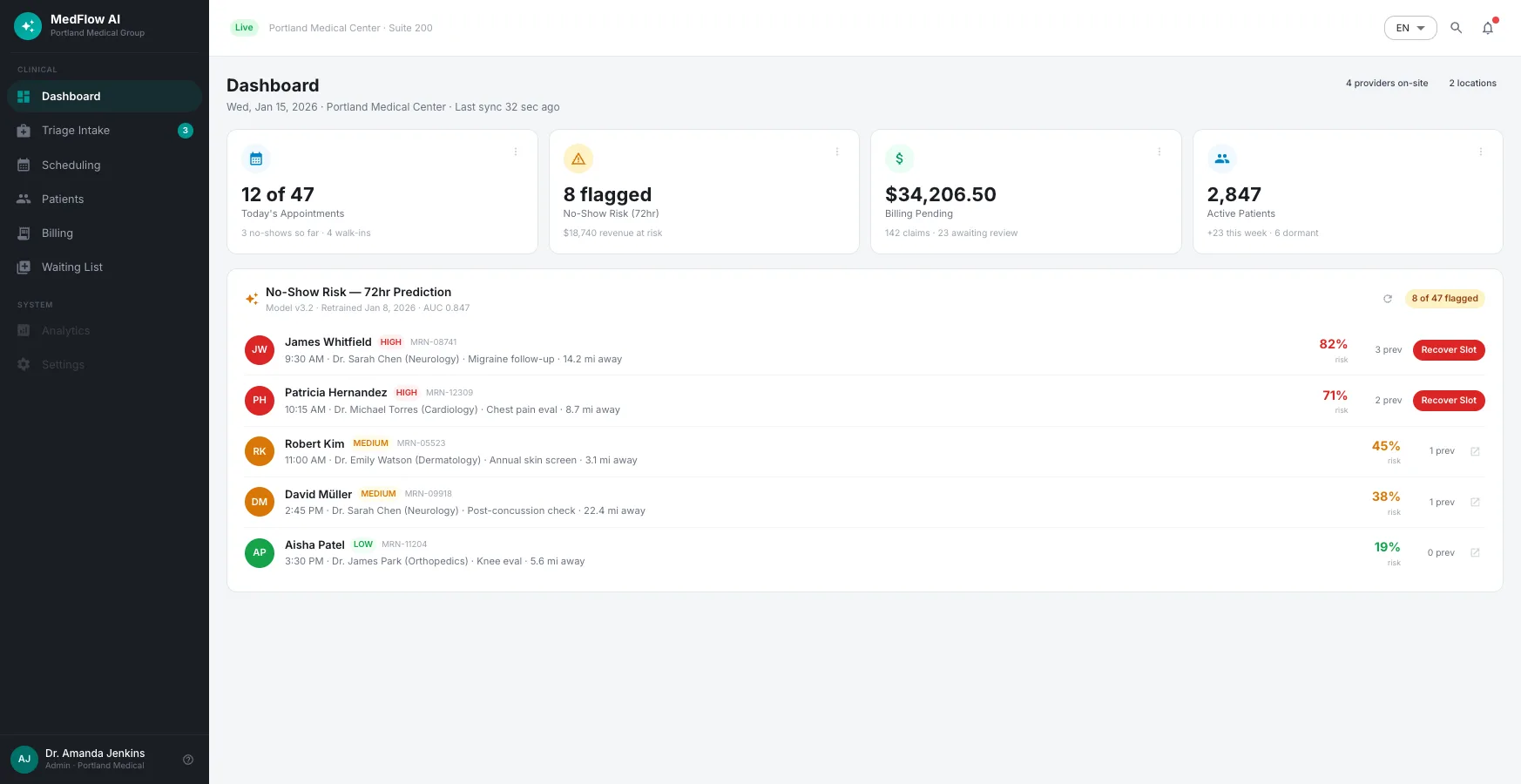
Four KPI cards, a live no-show risk list, and one-click slot recovery — everything an admin needs without switching tabs.
- 47 appointments, 12 at-risk, $34K pending at a glance
- AI risk scores updated in real time
- Pre-fill cancelled slots with one click
- Zero tab-switching for daily operations
AI Symptom Triage
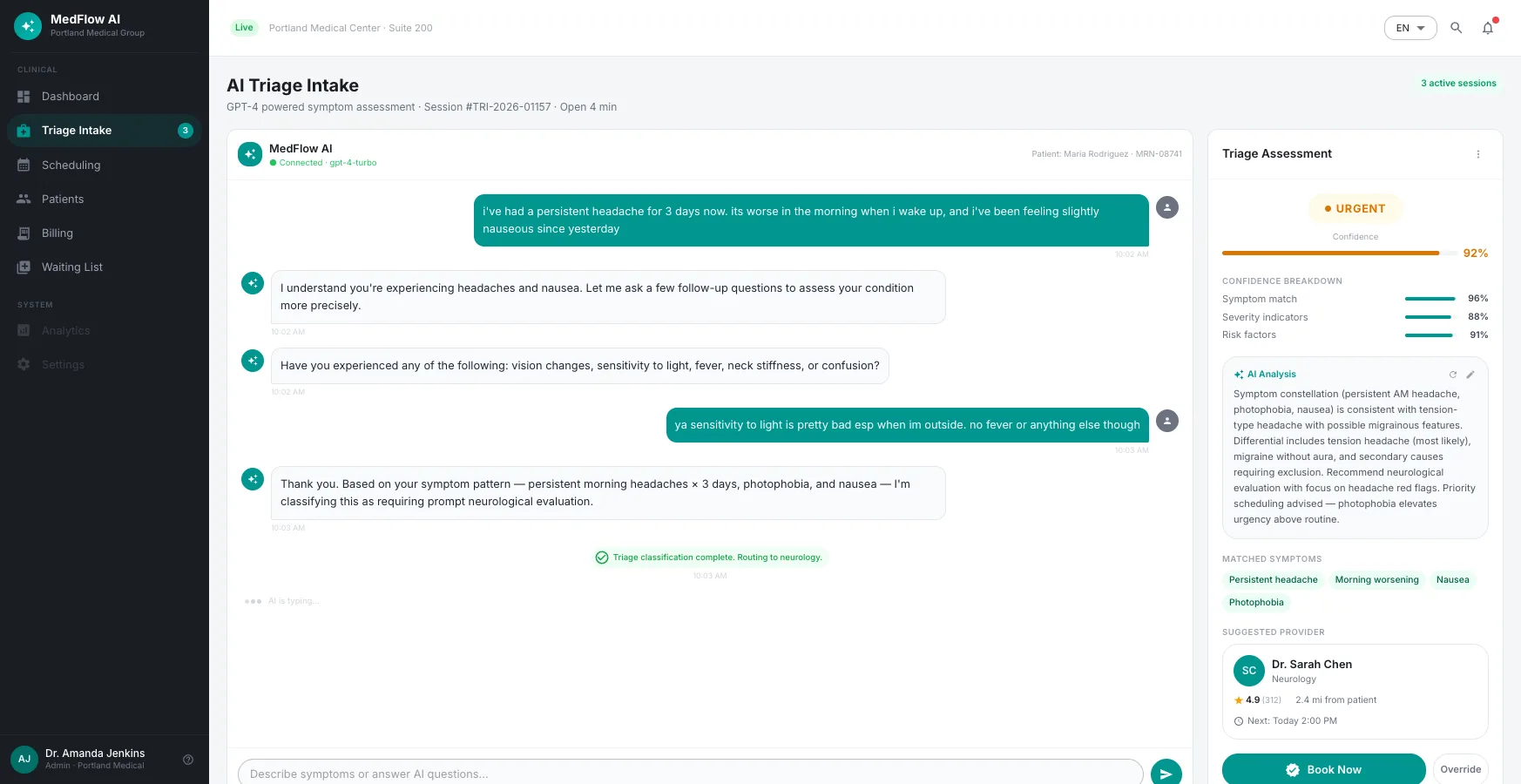
Patients describe symptoms in a chat. GPT-4 classifies urgency, scores confidence at 92%, and routes to the right specialist — cutting triage time by 80%.
- 92% diagnostic confidence on first pass
- Automatic specialist routing
- 80% faster than manual intake
- Structured data ready for the EHR
72-Hour No-Show Predictor
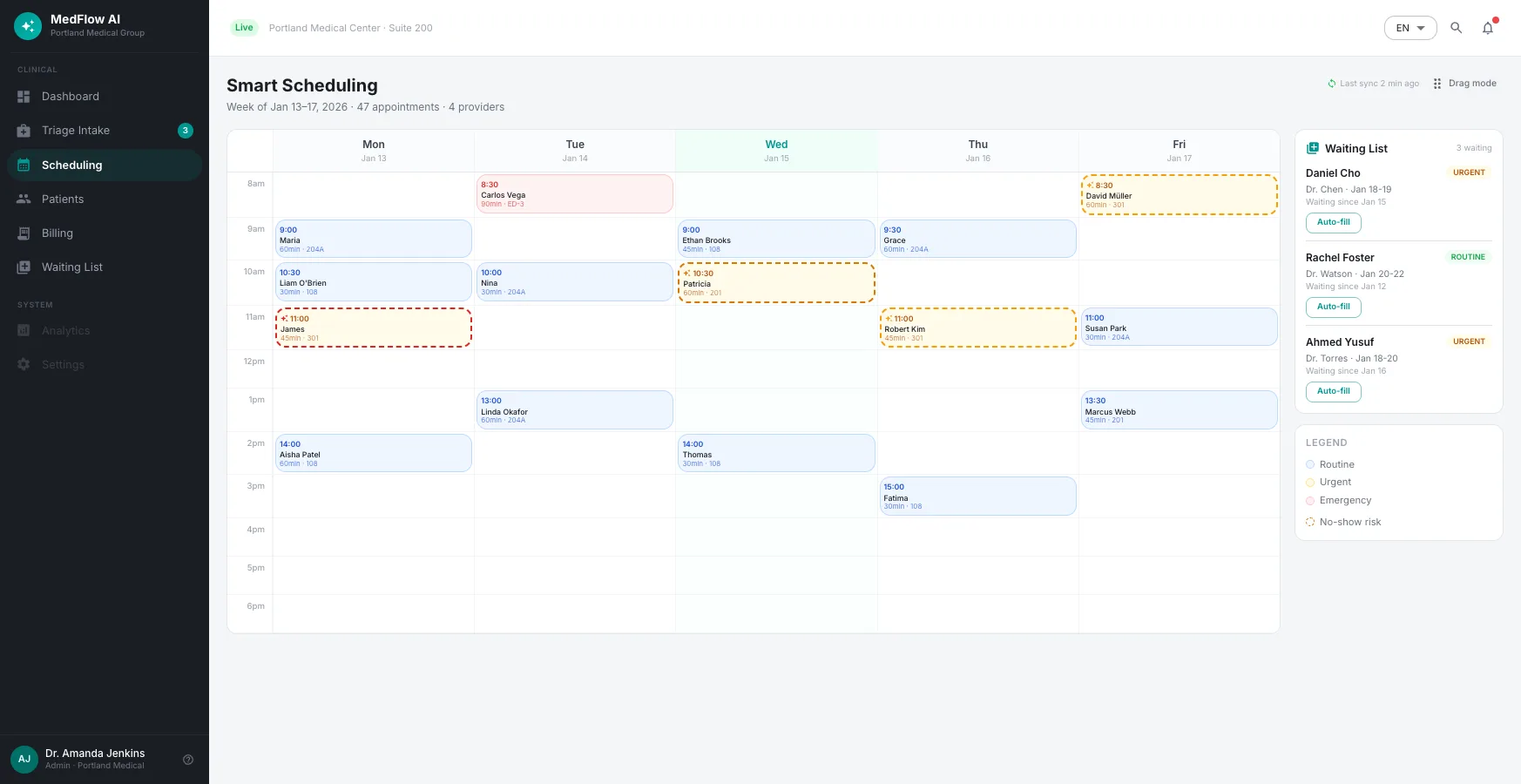
The calendar flags at-risk slots 72 hours out, sends personalised reminders, and simultaneously offers those slots to waiting patients — before anyone cancels.
- Risk scoring runs 72 hours before each appointment
- Automated SMS/email/push reminders
- High-risk slots offered to waitlist in parallel
- No-show rate dropped from 22% to 14.5%
Unified Patient 360
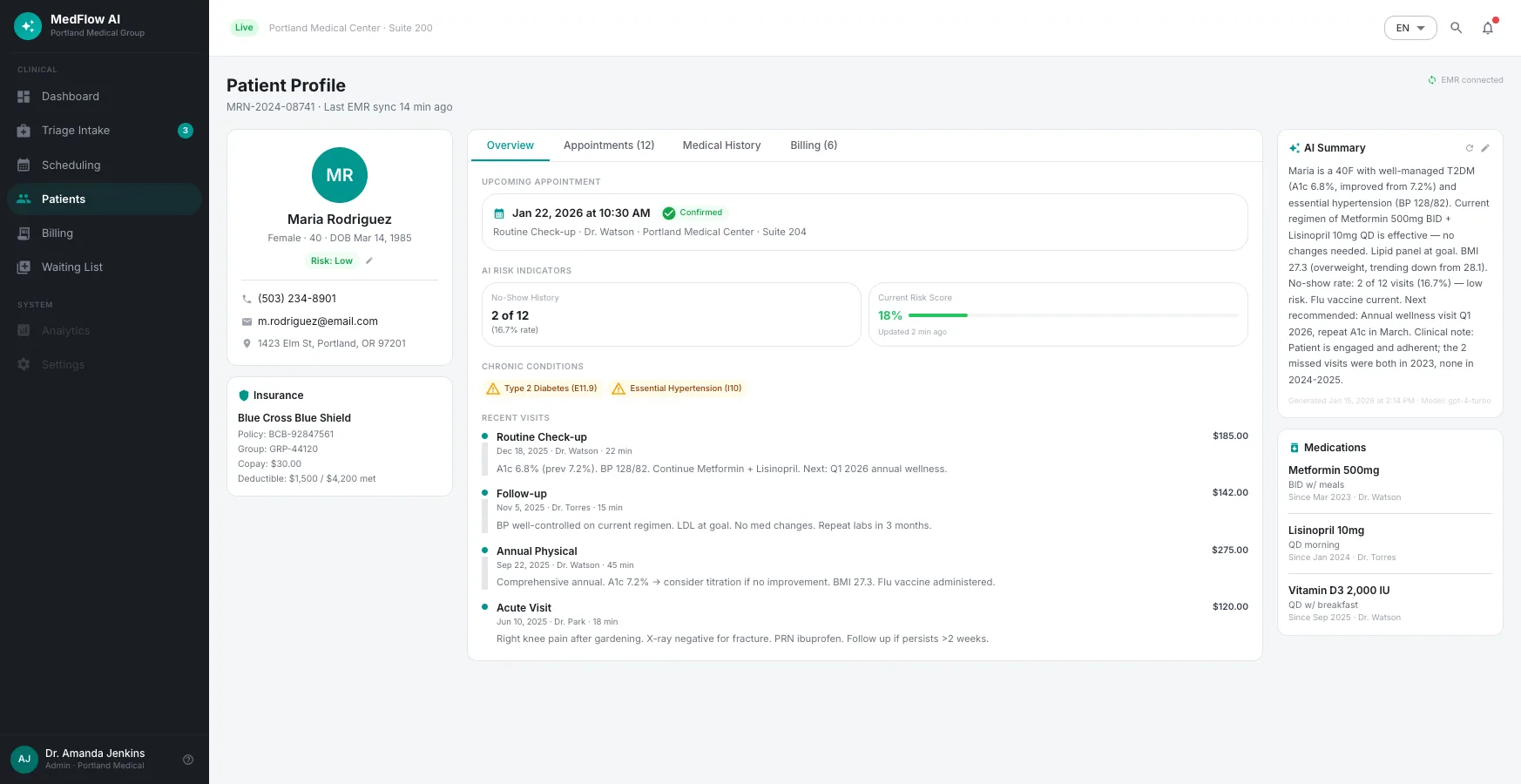
One screen for the full patient picture — appointments, history, billing, AI-generated summaries, and risk indicators pulled from the EMR.
- AI-written clinical summaries
- No-show history and risk level visible instantly
- Medications, visits, and billing in one place
- No more digging through separate systems
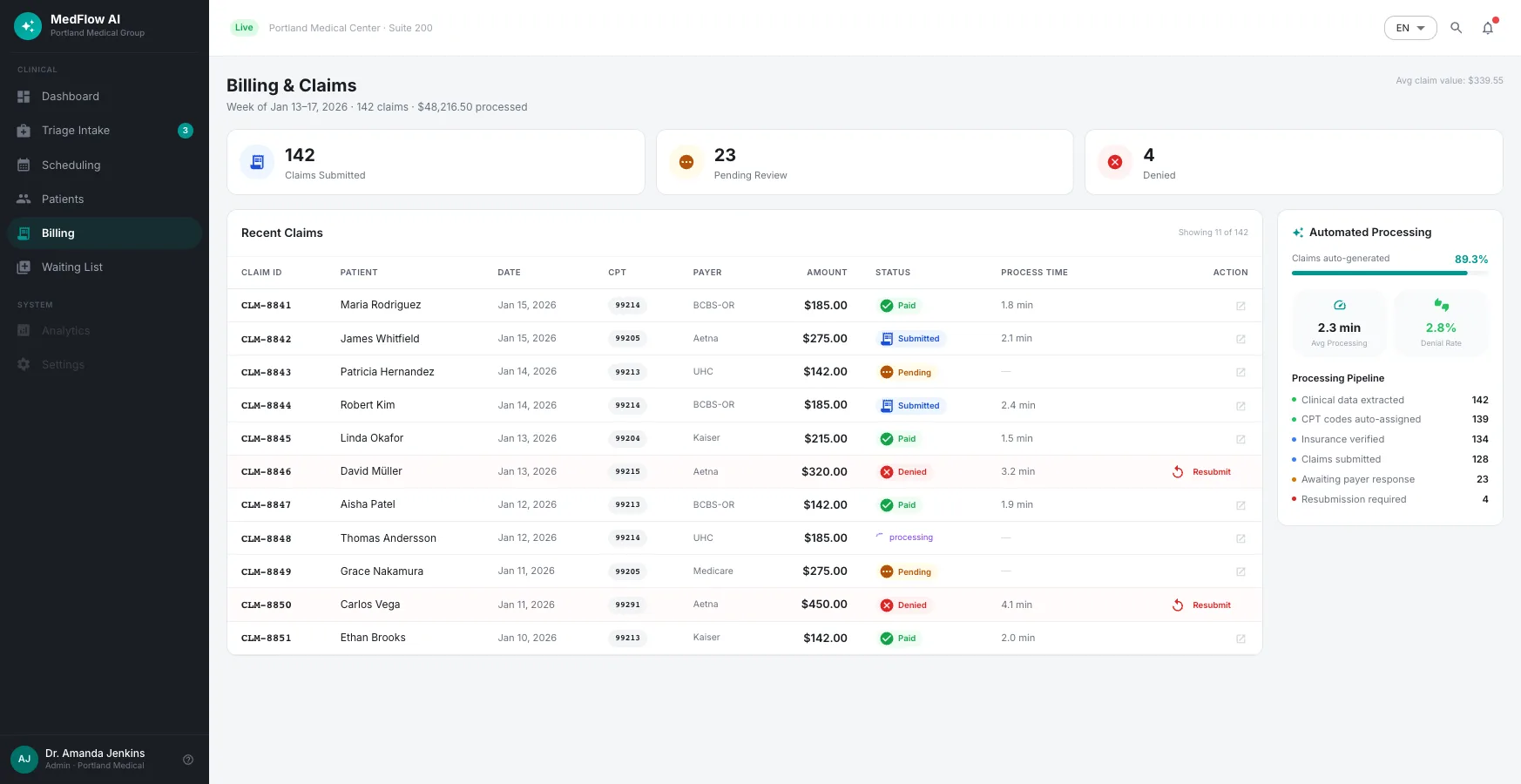
Claims on Autopilot
89% of claims generated and submitted without a human touching them. Average processing time: 2.3 minutes. Denial rate: 2.8%.
- 89% fully automated claim generation
- 2.3 min average processing time
- 2.8% denial rate (industry avg: 5–10%)
- 71% faster than manual claims workflows
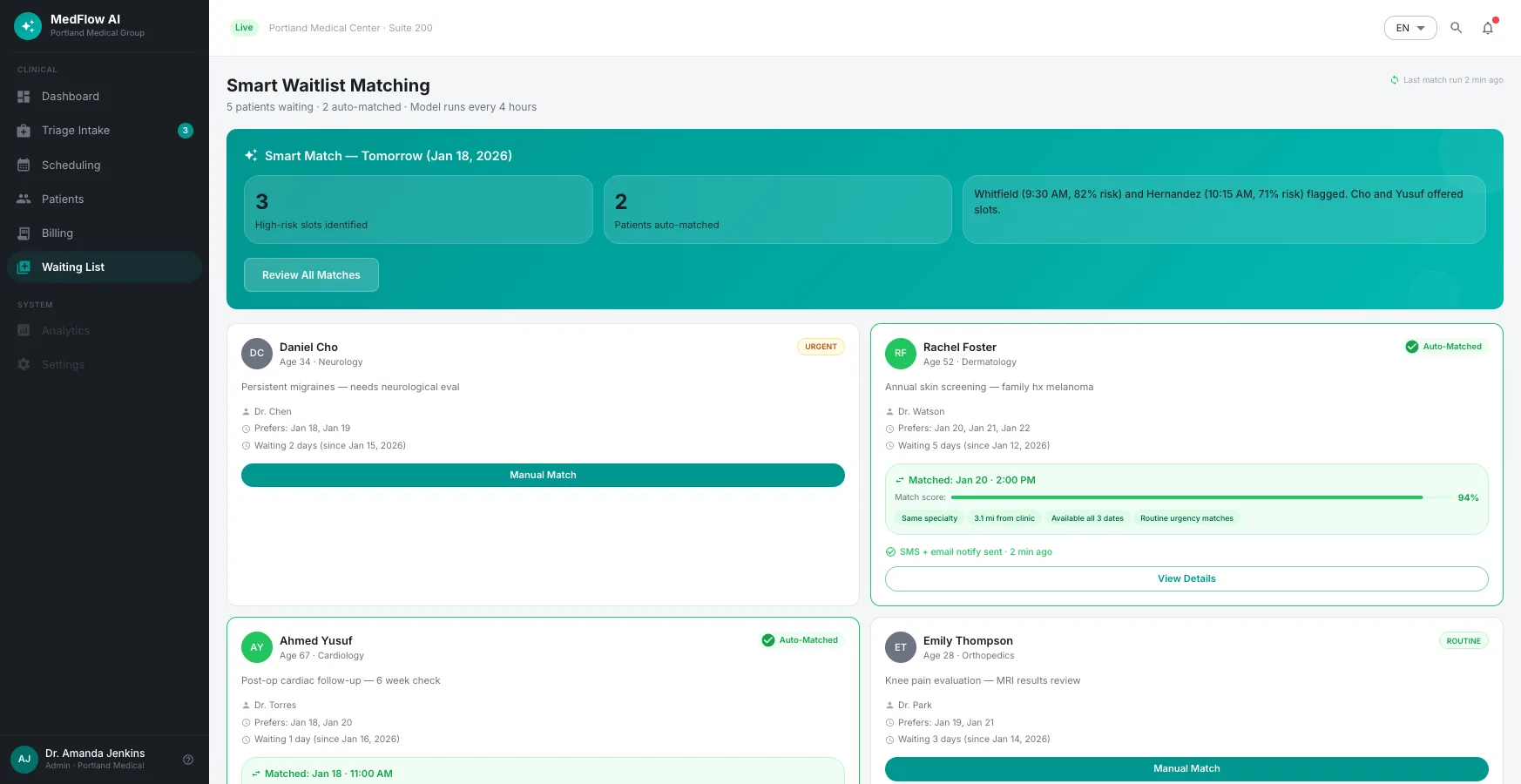
Smart Waitlist Matching
When a high-risk slot is predicted, the system automatically matches waiting patients by availability and need — filling gaps before they open.
- Automatic patient-to-slot matching
- Matches based on availability and clinical need
- Waitlist patients notified instantly
- Closed-loop: prediction → match → fill
The AI Layer
The no-show prediction model is the centrepiece. It was trained on 18 months of historical appointment data — factoring in patient age, appointment type, distance from clinic, day of week, weather, and previous no-show history. The model runs 72 hours before every appointment and produces a probability score. Patients above the threshold receive an automated personalised reminder sequence (SMS, email, or app push based on their preference). Slots predicted as high-risk are simultaneously offered to patients on the waiting list. The result: no-show rate dropped from 22% to 14.5% within 90 days of deployment.
Results
- •50,000+ patients managed on the platform
- •No-show rate reduced from 22% to 14.5% — a 34% improvement
- •Billing automation reduced claims processing time by 71%
- •HIPAA compliant, SOC 2 certified, deployed on AWS
- •Delivered in 38 days from kickoff to production